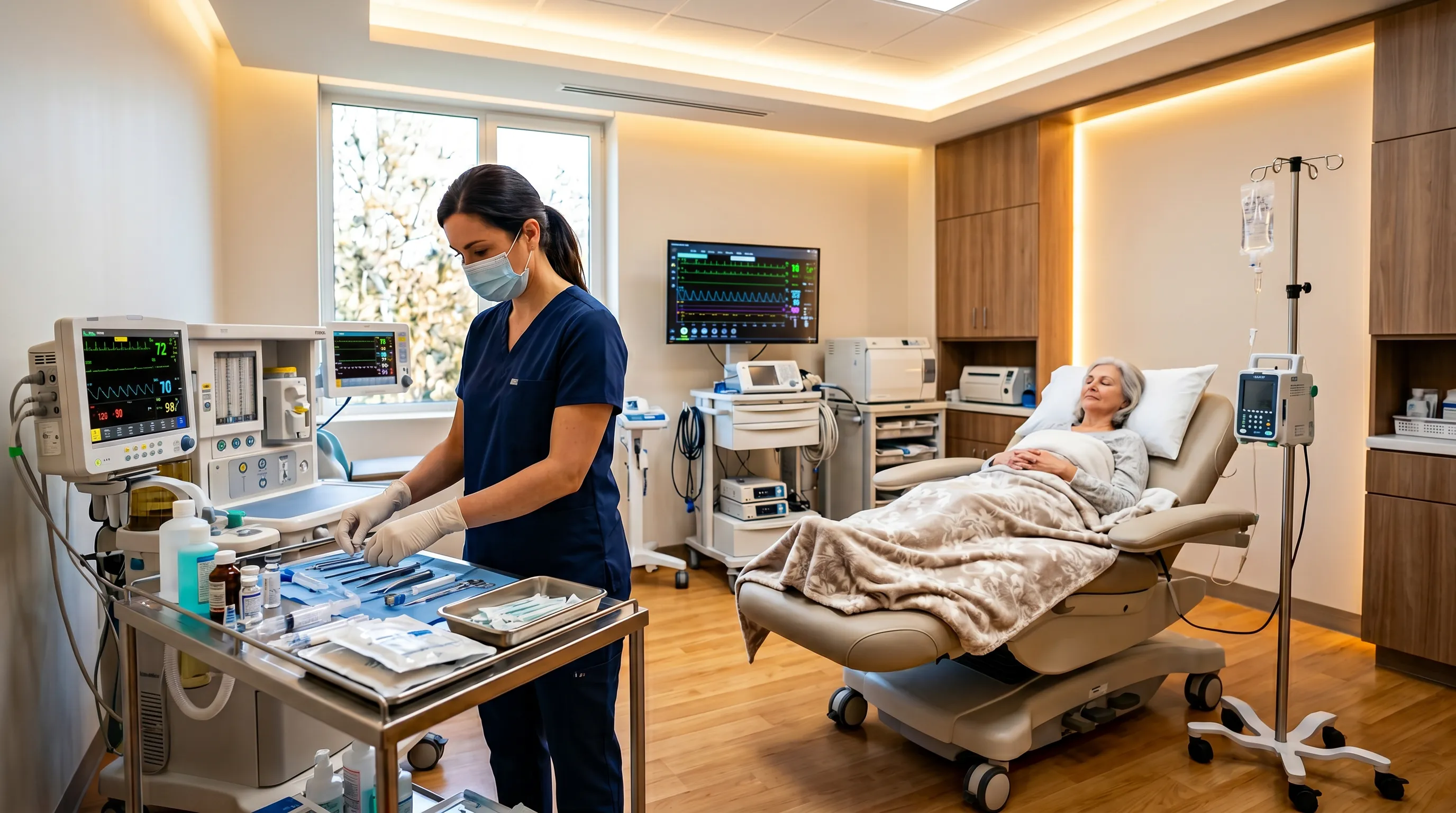
Hair Transplant Clinics professionals serving Denver, CO
Key Takeaways
•Denver has 20 listed hair transplant surgery professionals with an impressive average rating of 4.7 out of 5 stars, indicating a competitive and high-quality local market.
•Bionetics Health leads the Denver market with a perfect 5.0-star rating across 102 reviews — the largest volume of top-rated reviews among all listed providers in the city.
•Denver's semi-arid climate and intense high-altitude UV exposure make post-operative sun protection a non-negotiable requirement; patients must plan for 6–12 months of diligent scalp sun care.
•Hair transplant costs in Denver range from $4,000 to $20,000+, depending on technique (FUT vs. FUE vs. robotic), graft count, and the provider's experience level — always get itemized quotes.
•Denver's cold, snowy winters are strategically ideal for scheduling your procedure: natural hat-wearing weather conceals early recovery, and many providers can accommodate year-end scheduling when patients have time off.
Hair Transplant Surgery in Denver: What You Need to Know
Denver's hair transplant market has matured significantly over the past decade, and the numbers reflect it. With 20 listed professionals and an average rating of 4.7 stars, Denver residents no longer need to travel to coastal cities for world-class hair restoration. The city's rapidly growing population — now over 715,000 — has driven sustained demand, and providers have responded with expanded services ranging from traditional follicular unit transplantation (FUT) to advanced follicular unit extraction (FUE), scalp micropigmentation (SMP), and stem cell hair restoration protocols. What distinguishes the Denver market from other metros is the unusually high proportion of providers maintaining perfect or near-perfect ratings, suggesting that patient selection, consultation quality, and post-operative care are being executed at a consistently high level across the board.
That said, Denver's unique geography demands a more nuanced approach to hair transplant planning than you would encounter at sea level. Sitting at 5,280 feet, Denver's thin atmosphere delivers significantly more ultraviolet radiation than lower-elevation cities — roughly 25% more UV exposure than at sea level. For hair transplant patients, this matters enormously during the recovery phase. Freshly transplanted follicles and healing scalp tissue are acutely vulnerable to UV damage, and Denver's abundant sunshine means patients must be far more aggressive with post-operative sun protection protocols than they would in, say, Chicago or Seattle. Additionally, Denver's semi-arid climate — average humidity often dipping below 30% — can affect scalp healing and moisture retention, making hydration and topical care protocols more important here than in more humid markets.
The city's outdoor recreation culture also shapes the patient population in practical ways. Denver residents are disproportionately active — hiking, skiing, mountain biking, and trail running are core parts of daily life for a large segment of the population. This means the conversation about activity restrictions post-surgery is especially important. Strenuous outdoor activity must typically be paused for 2–4 weeks post-procedure, and sun-exposed activities like skiing at altitude require careful management for months afterward. The best Denver providers understand this lifestyle context and build recovery timelines and aftercare plans that speak directly to an active patient base rather than offering one-size-fits-all instructions.
Denver Local Tip: Because Denver sits at 5,280 feet with roughly 25% more UV intensity than sea level, ask every prospective provider specifically about their high-altitude post-operative sun protection protocol. A provider who does not have a clear, Denver-specific answer to this question may not have enough local experience to manage your recovery optimally. Wide-brim hats (not tight-fitting baseball caps, which can damage grafts) are your best friend during the first two weeks, and Denver winters conveniently make hat-wearing socially effortless.
How Much Does Hair Transplant Surgery Cost in Denver?
Hair transplant pricing in Denver follows the national range of $4,000 to $20,000+, but there are local factors that push costs toward the higher end for many patients. Denver's cost of living has risen considerably over the past decade, and medical overhead — real estate, staffing, equipment — has followed. Additionally, the increasing adoption of advanced technologies like robotic FUE systems (ARTAS and NeoGraft) and platelet-rich plasma (PRP) adjunct therapies has added layers of pricing complexity. Most Denver providers price procedures on a per-graft basis, typically ranging from $3 to $12 per graft depending on technique and provider tier, with the total graft count determined during consultation based on the extent of hair loss.
It is critical to understand what is and is not included in a quoted price. Some Denver providers offer all-inclusive pricing that covers pre-operative consultations, the surgical fee, anesthesia or local anesthetic, post-operative follow-up visits, and any topical aftercare kits. Others quote a base surgical fee and bill separately for PRP treatments, follow-up appointments, or prescribed medications like minoxidil and finasteride. Always request an itemized written quote before committing. Financing options are widely available through third-party medical financing companies, and several Denver providers work with CareCredit or similar platforms. Do not let financing offers distract from the core question of provider quality — the cheapest monthly payment on a poorly executed procedure is still an expensive outcome.
Service
Low Estimate
High Estimate
Notes
FUT (Strip Harvest) — 1,500–2,500 Grafts
Low$4,000
High$8,500
Linear scar technique; lower cost per graft; best for patients needing large graft counts; less common among Denver providers than FUE
FUE (Follicular Unit Extraction) — 1,500–2,500 Grafts
Low$6,500
High$14,000
No linear scar; longer surgical time; most widely offered technique in Denver; per-graft pricing typically $4–$8 at reputable Denver clinics
Robotic / Advanced FUE (ARTAS or NeoGraft) — 1,500–2,500 Grafts
Low$9,000
High$20,000
AI-assisted extraction; highest precision; premium pricing reflects technology overhead; increasingly available in the Denver metro market
Scalp Micropigmentation (SMP) — Full Scalp
Low$1,500
High$4,500
Non-surgical; creates illusion of shaved-head density; Pinnacle SMP is a top-rated Denver-based specialist in this category; often used as a complement to or alternative for surgery
Denver Money-Saving Tip: Schedule your consultation in October or November. Many Denver hair transplant providers see a spike in scheduling inquiries during the year-end holiday window and will sometimes offer complimentary PRP add-ons or waived consultation fees during slower pre-holiday booking periods to fill surgical calendars. Additionally, if you are considering SMP as a complement to or instead of surgical transplant, Denver has highly rated dedicated SMP studios like Pinnacle SMP (5.0★, 71 reviews) that offer specialist-level results at a fraction of the cost of surgical restoration.
How to Choose the Right Hair Transplant Surgery
5 Questions to Ask Before Hiring
Are you board-certified and/or a member of the American Board of Hair Restoration Surgery (ABHRS)? The right answer is yes to at least one — ABHRS membership requires demonstrated surgical volume, a written examination, and peer review. Any provider who cannot confirm formal credentials in hair restoration surgery specifically (not just general dermatology or plastic surgery) warrants additional scrutiny.
Can you show me before-and-after photos of patients with a hair loss pattern similar to mine, treated specifically in your clinic? The right answer is yes, with a substantial portfolio. Photos should be well-lit, consistent, and show results at 12–18 months post-procedure. Be skeptical of clinics that can only show manufacturer-provided stock images or results from other providers.
Who physically performs the extraction and implantation — the physician or technicians? The right answer depends on the clinic model, but you should know precisely: in Colorado, the supervising physician is ultimately responsible, but many clinics use trained technicians for portions of the procedure. Ask whether the physician performs the hairline design and implantation personally, as these are the most artistically and technically critical steps.
What is your specific post-operative protocol for Denver's high altitude and semi-arid climate? The right answer demonstrates awareness of UV intensity at 5,280 feet, specific guidance on scalp moisturization given Denver's low humidity, and clear activity restriction timelines relevant to an active outdoor lifestyle. Generic aftercare instructions not tailored to Denver's environment are a warning sign.
What is your graft survival rate, and how do you measure it? The right answer acknowledges that industry-accepted graft survival for quality FUE procedures is 90–95%+, and a reputable provider should be able to explain how they optimize for this through proper storage media, minimized out-of-body graft time, and implantation technique. Vague answers like 'we do our best' are insufficient.
Red Flags When Hiring Hair Transplant Surgery
Red Flags to Watch For in the Denver Market:
Pressure to book or pay a deposit during your first consultation — reputable Denver providers give you time to review your options; high-pressure same-day booking tactics are a hallmark of volume-driven clinics prioritizing revenue over outcomes.
Unusually low per-graft pricing (under $2.50 per graft for FUE) — at this price point, surgical quality is almost always compromised through rushed procedures, overworked technicians, or inferior graft handling; the Denver market average for quality FUE is $4–$8 per graft.
No physician present on-site during the procedure — in Colorado, delegating the entire surgical procedure to unlicensed or minimally licensed technicians without direct physician oversight is both a regulatory concern and a patient safety risk.
Inability or unwillingness to provide local patient references or a verifiable before-and-after portfolio — any provider with genuine results should be able to connect you with consenting past patients or show an extensive documented portfolio; refusal is a serious red flag.
Guarantees of specific hair density or exact graft counts without a scalp assessment — no ethical hair transplant surgeon commits to precise outcomes without a thorough in-person or high-quality telehealth scalp evaluation including donor density measurement; promises made without this assessment are marketing, not medicine.
Top-Rated Hair Transplant Surgery in Denver
Among the 20 listed hair transplant surgery professionals in Denver, five have achieved perfect 5.0-star ratings, though they vary significantly in review volume — an important distinction when evaluating credibility. Bionetics Health leads the Denver market not just in rating but in the depth of that rating: 102 reviews at a perfect 5.0 stars represents a sustained track record of exceptional patient experience, not a small-sample outlier. Bionetics Health focuses on comprehensive health and restoration services, and their hair-related offerings appear to resonate strongly with Denver's health-conscious, results-oriented population.
Pinnacle SMP holds an equally perfect 5.0-star rating backed by 71 reviews, making it the most credentialed scalp micropigmentation specialist in the Denver market by review volume. For patients who are not surgical candidates, are looking to complement a previous hair transplant with added density illusion, or want to address scalp scarring from prior procedures, Pinnacle SMP represents the strongest purely SMP-focused option in the city. Hair Growth Clinic of Parker — located in the Parker suburb southeast of Denver — rounds out the high-volume 5.0-star providers with 48 reviews, suggesting strong patient satisfaction in the southern Denver metro corridor.
Camden Medical Hair Institute brings a medically formal approach to the Denver market, with a 5.0-star rating across 9 reviews. While the review count is lower, the perfect rating and clinical branding suggest a boutique, physician-driven practice model. Denver Hair Clinic — Hair Transplant and Stem Cell Hair Restoration is notable for its explicit focus on stem cell hair restoration, a cutting-edge adjunct therapy that uses regenerative medicine principles to potentially enhance transplant outcomes and stimulate dormant follicles. This clinic's positioning in the stem cell space makes it particularly relevant for patients with diffuse thinning or those seeking non-surgical adjuncts. Across all five of these top-rated providers, 100% offer direct phone contact, meaning you are not navigating a faceless web form — you can speak to a human being when scheduling your consultation.
Company
Rating
Reviews
Best For
Bionetics Health
5.0★
102 reviews
Patients seeking the most review-validated provider in Denver; comprehensive health-focused approach to hair restoration; highest confidence rating based on review volume
Pinnacle SMP
5.0★
71 reviews
Scalp micropigmentation as a standalone procedure or complement to surgical transplant; patients seeking non-surgical density enhancement or scar camouflage from prior procedures
Hair Growth Clinic of Parker
5.0★
48 reviews
South Denver metro and Parker-area patients seeking a high-rated local option without commuting to central Denver; strong community trust reflected in review depth
Camden Medical Hair Institute
5.0★
9 reviews
Patients preferring a boutique, medically oriented clinical environment; suitable for those who prioritize physician-driven consultation and a personalized care model
Early-adopter patients interested in stem cell hair restoration as a cutting-edge adjunct therapy; patients with diffuse thinning patterns exploring regenerative medicine options alongside or instead of traditional transplant surgery
Seasonal Guide for Denver
Denver's seasonal calendar creates distinct windows of advantage and disadvantage for hair transplant surgery, and strategic scheduling can meaningfully improve both your recovery experience and your long-term outcome. Understanding how Denver's climate interacts with the post-operative healing timeline is something every prospective patient should think through carefully before booking.
Winter (November through February) is widely regarded as the optimal scheduling window for Denver hair transplant patients, and this is not simply a marketing talking point — there are genuine physiological and practical reasons behind it. Denver winters are cold, snowy, and naturally hat-wearing weather, which provides convenient social cover for the early recovery phase when scalp redness, scabbing, and visible density changes are most apparent. More importantly, reduced UV exposure during short winter days lowers the risk of UV damage to healing grafts during the critical first 2–4 weeks. However, a key caution for Denver specifically: avoid tight-fitting winter beanies or ski helmets during the first 10–14 days post-procedure. Direct pressure on newly implanted grafts before they fully anchor into the scalp — typically achieved around day 10–14 — can dislodge follicles. Loose, wide-brim options are appropriate; snug performance hats are not.
Spring (March through May) is a moderate scheduling period in Denver. UV intensity begins increasing significantly as the days lengthen and Denver's famous 300+ sunny days per year reassert themselves. Patients scheduling spring procedures need to be especially proactive about sun protection because the temptation to be outside increases just as UV exposure is rising. Post-operative scalp sunscreen (SPF 50+ formulated without irritants) and protective headwear become daily requirements through the summer months. Spring also brings Denver's infamous hail season — while hail itself is unlikely to directly impact a recovering scalp, sudden temperature swings of 30–40°F within a single day (common in Denver spring) can affect scalp sensitivity and comfort during recovery.
Summer (June through August) is the most challenging period for post-operative recovery in Denver, and most experienced providers will counsel patients to either schedule summer procedures with aggressive aftercare planning or to consider alternative timing. Denver summers bring intense high-altitude UV radiation, outdoor lifestyle demands that conflict with activity restrictions, and the psychological difficulty of avoiding outdoor recreation when the city's trails, parks, and mountains are at their most inviting. If summer is your only viable window, select a provider who issues a specific summer-recovery aftercare protocol, not generic instructions.
Fall (September through October) is arguably the second-best scheduling window in Denver, and the one most aligned with year-end time-off planning. Many Denver employers and professionals find it practical to schedule procedures in October, recover through November, and return to full activity by the holiday season. Temperatures are moderate, UV is declining, and the early-recovery period coincides with naturally cooler weather that makes hat-wearing comfortable. Additionally, fall scheduling allows for the critical 12-month growth assessment to occur the following fall, giving patients the clearest possible picture of final results before the second anniversary of their procedure.
Frequently Asked Questions
How long does it take to see final results from a hair transplant in Denver?
Final results from a hair transplant typically require 12–18 months to fully manifest, regardless of where the procedure is performed. The transplanted follicles enter a shock shedding phase around weeks 2–6 post-procedure — this is normal and expected, not a sign of failure. New growth typically begins emerging at months 3–4 and progresses through month 12. Denver-specific note: high-altitude UV exposure during the growth phase can potentially affect follicle health, so consistent sun protection through the entire first year is particularly important here. Do not evaluate your results before the 12-month mark.
Is hair transplant surgery more expensive in Denver than in other cities?
Denver's hair transplant pricing falls within the national range of $4,000–$20,000+, but the city's rising cost of living and the increasing availability of advanced technologies like robotic FUE systems mean that premium procedures often land toward the higher end of that range. The per-graft cost at quality Denver clinics typically runs $4–$8 for FUE. Traveling to lower-cost markets is an option some patients consider, but factor in travel costs, the inability to easily access your surgeon for follow-up concerns, and the difficulty of managing post-operative complications remotely. For most patients, the convenience and accountability of a local Denver provider outweighs modest cost savings elsewhere.
Find Hair Transplant Clinics Professionals in Denver
Browse top-rated contractors, compare reviews, and get free quotes.
What credentials should I look for in a Denver hair transplant surgeon?
The most meaningful credential in the hair transplant field is membership or certification through the American Board of Hair Restoration Surgery (ABHRS), which requires demonstrated surgical experience, a rigorous written examination, and peer review. Board certification in dermatology or plastic surgery is relevant background but does not by itself constitute hair transplant specialization — many surgeons perform hair transplants as a small fraction of a broader practice. In Denver's market of 20 listed professionals, ask each provider directly about their ABHRS status, their annual hair transplant case volume, and how many years they have focused specifically on hair restoration. A surgeon performing 200+ cases per year has meaningfully more practical experience than one performing 20–30.
How does Denver's altitude and climate affect hair transplant recovery?
Denver's 5,280-foot elevation subjects the scalp to approximately 25% more UV radiation than cities at sea level, which is the most clinically significant environmental factor for post-operative hair transplant patients. During the first 6–12 months of recovery — the window when newly transplanted follicles are establishing blood supply and anchoring — UV exposure can disrupt healing and potentially compromise graft viability. Denver's semi-arid climate (average humidity often below 30%) also means scalp dryness is a more active management concern than in humid climates, requiring more consistent use of gentle moisturizing serums or saline spray during the healing phase. Discuss these specific factors with any Denver provider you are considering — their familiarity with altitude-specific aftercare is a legitimate indicator of local expertise.
How soon after a hair transplant can I return to outdoor activities in Denver?
General post-operative guidelines restrict strenuous physical activity for 2–4 weeks after hair transplant surgery to prevent elevated blood pressure, sweat irritation to grafts, and physical trauma to the donor and recipient areas. For Denver's outdoor recreation community, this means no hiking, skiing, cycling, or trail running during that window. After clearance for physical activity, sun protection protocols remain in effect for 6–12 months — meaning ski days at altitude, high-altitude hikes, and extended sun exposure all require protective headwear and SPF application. Your surgeon should provide explicit, activity-specific guidance; if their instructions do not address skiing, high-altitude hiking, or other Denver-specific activities by name, ask directly.