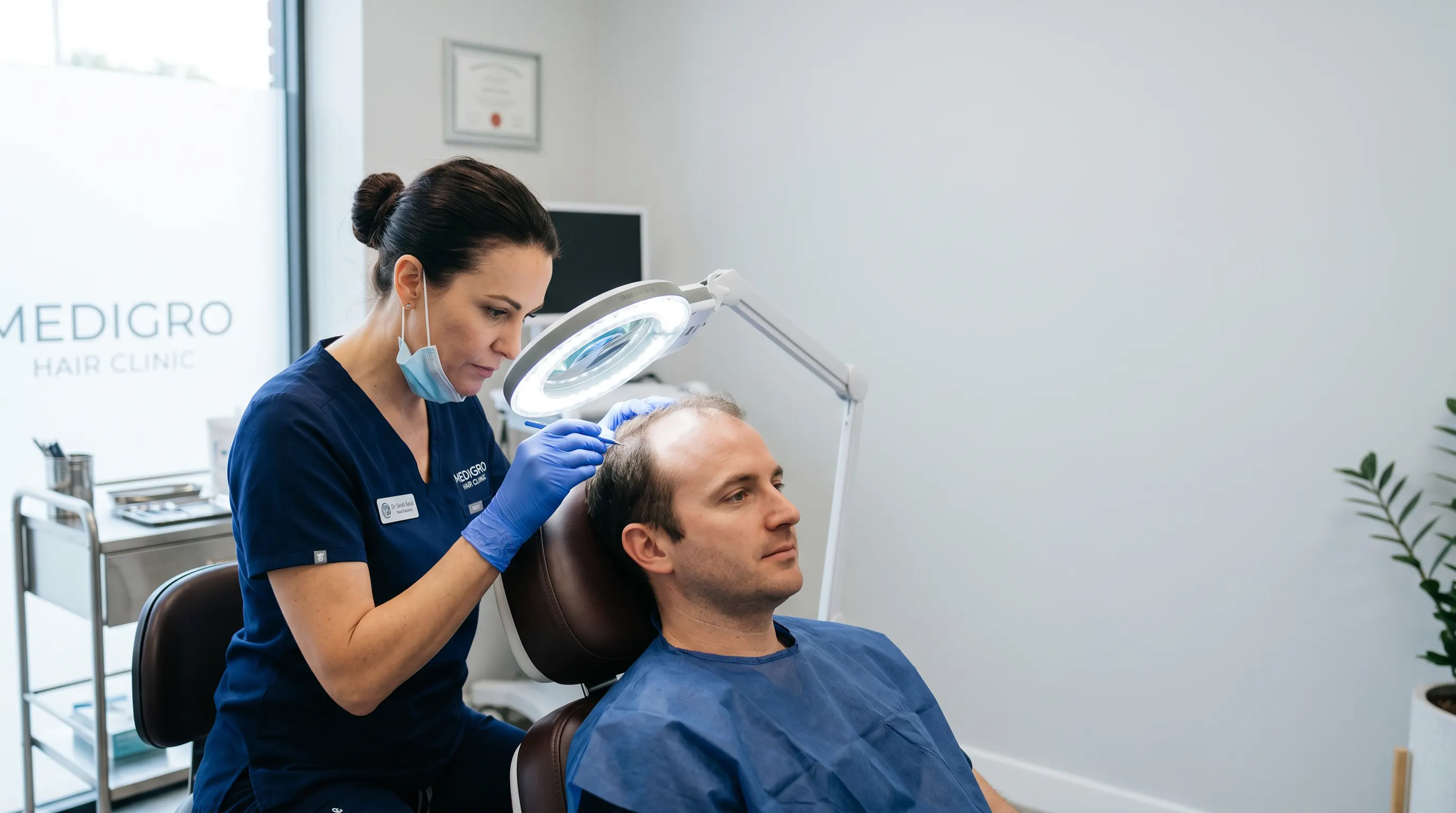
Hair Transplant Clinics professionals serving Seattle, WA
Key Takeaways
•Seattle has 20 listed hair transplant surgery professionals with an exceptional average rating of 4.8 out of 5 stars, indicating a mature, high-quality local market.
•SMP INK Seattle leads the market with a perfect 5.0-star rating across 150 reviews — the highest review volume among top-rated providers, making it the most statistically reliable top rating in the city.
Hair transplant surgery in Seattle typically costs between $4,000 and $20,000+, with final pricing driven by graft count, technique (FUE vs. FUT), and clinic reputation — Seattle's tech-industry economy supports a high concentration of premium providers.
•
•Seattle's oceanic climate and frequent rainfall create unique post-operative considerations: UV exposure is lower than in sunbelt cities, which is an advantage, but indoor humidity and the temptation to wear rain hats prematurely post-procedure are real risks to manage.
•Winter scheduling — particularly November through February — is strategically popular in Seattle because cold weather justifies hat-wearing during the early healing phase, year-end PTO allows extended downtime, and shorter daylight hours reduce UV risk to the scalp.
Hair Transplant Surgery in Seattle: What You Need to Know
Seattle's hair restoration market is quietly one of the strongest in the Pacific Northwest — and that strength is backed by numbers. With 20 listed professionals and an average rating of 4.8 stars, the city punches well above its weight relative to its population of approximately 750,000. For context, most mid-sized American cities of comparable population show wider variance in provider quality; Seattle's tight clustering near the top of the rating scale reflects both patient selectivity and a highly educated consumer base shaped by the city's dominant tech culture. Amazon, Microsoft, and a dense network of biotech employers have cultivated a population that researches major medical decisions thoroughly before committing — and providers in this market have had to perform accordingly.
The range of services available in Seattle spans the full spectrum of modern hair restoration, from surgical follicular unit excision (FUE) and follicular unit transplantation (FUT) to scalp micropigmentation (SMP), which is a non-surgical tattooing technique that mimics the appearance of a shaved head or adds density illusion. It is worth noting that several of the top-rated businesses in Seattle — including SMP INK Seattle and MM Seattle SMP — specialize in scalp micropigmentation rather than surgical transplantation. This distinction matters enormously when you are evaluating your options. If you are seeking actual hair transplant surgery (the harvesting and reimplantation of live hair follicles), you need to confirm that the clinic you are contacting performs surgical procedures, not just SMP. Both are legitimate and valuable services, but they address different patient goals and carry entirely different clinical requirements.
For those specifically seeking surgical hair transplantation in Seattle, the standout surgical clinic in the local data is Hasson & Wong Hair Transplant Clinic Seattle, which carries a 5.0-star rating and is a Seattle-area outpost of one of the most internationally recognized hair transplant practices in North America. Seattle Hair Clinic and Nelsus Hair Restoration Clinic round out the surgical options with strong ratings as well. The 100% direct phone contact rate across all 20 listed businesses is a practical advantage for Seattle patients — it means you can reach a live person or scheduling team immediately rather than navigating automated systems, which is important when you have specific clinical questions before booking a consultation.
Seattle Local Tip: Because of the city's persistent overcast conditions and frequent rain, many Seattle patients underestimate UV exposure risk post-procedure. However, breaks in cloud cover — especially in July and August — can deliver intense UV radiation at northern latitudes. If you schedule your procedure in spring, plan for protective headwear that does not compress the scalp graft sites. A loose, wide-brim hat is safer than a fitted baseball cap during the first two weeks. Ask your surgeon specifically what headwear is safe and when.
How Much Does Hair Transplant Surgery Cost in Seattle?
Hair transplant surgery in Seattle follows national pricing patterns but skews toward the higher end of the range, consistent with the city's elevated cost of living and concentration of premium medical providers. The typical range runs from $4,000 on the lower end — generally for smaller sessions with lower graft counts at clinics with newer surgeons or more modest overhead — up to $20,000 or more for comprehensive mega-sessions at internationally recognized clinics like Hasson & Wong. Most patients in Seattle seeking treatment for moderate to advanced hair loss will fall somewhere in the $7,000 to $14,000 range depending on the number of grafts required and the technique used.
Pricing in this market is almost universally calculated on a per-graft basis, typically ranging from $4 to $10 per graft at surgical clinics. The number of grafts you need is determined during a consultation and depends on the area of coverage required and your donor hair density. A patient in the early stages of hair loss (Norwood Scale II–III) might need 1,000 to 2,000 grafts, while someone with more advanced loss (Norwood V–VI) could require 3,000 to 5,000 or more. Scalp micropigmentation, offered by providers like SMP INK Seattle and MM Seattle SMP, operates on a fundamentally different pricing model — typically charged per session rather than per graft — and is generally more affordable than surgical options, though it does not produce actual hair growth. Seattle patients should also factor in the cost of follow-up visits, any required medications such as finasteride or minoxidil to preserve non-transplanted hair, and potential touch-up sessions, which some clinics include in their initial pricing and others bill separately.
Service
Low Estimate
High Estimate
Notes
FUE Hair Transplant (Small Session, 1,000–2,000 grafts)
Low$4,000
High$9,000
Appropriate for early-stage loss (Norwood II–III); most common entry-level surgical procedure in Seattle
FUE Hair Transplant (Large Session, 2,500–4,000+ grafts)
Low$10,000
High$18,000
Mid-to-advanced loss; premium clinics like Hasson & Wong may approach or exceed top of range
FUT (Strip) Hair Transplant
Low$5,000
High$15,000
Generally offers higher graft yield per session; leaves linear scar but often more economical per graft
Scalp Micropigmentation (SMP)
Low$1,500
High$4,500
Non-surgical; SMP INK Seattle and MM Seattle SMP are top-rated local specialists; requires touch-ups every few years
Money-Saving Tip for Seattle Patients: Several Seattle-area surgical clinics offer complimentary consultations — take advantage of at least two or three before committing. Graft count estimates can vary significantly between surgeons, and a lower quoted count at a reputable clinic may save you thousands without compromising results. Additionally, scheduling your procedure in January or February (peak Seattle recovery season) sometimes unlocks promotional pricing or package deals that clinics use to fill slower scheduling windows after the holiday rush.
How to Choose the Right Hair Transplant Surgery
5 Questions to Ask Before Hiring
Is the performing surgeon board-certified and a member of the American Board of Hair Restoration Surgery (ABHRS)? — The right answer is yes to both. ABHRS membership requires demonstrated competency through peer review and examination. Any surgeon who deflects this question or offers vague credentials is a concern. In Seattle's competitive market, top surgical providers will answer this confidently and immediately.
Who physically performs the graft extraction and implantation — the surgeon or technicians? — The right answer is that the surgeon is directly involved in all critical phases, particularly the graft extraction and the creation of recipient sites. Many clinics use trained technicians for implantation, which can be acceptable, but you should know exactly who is doing what. Clinics that are evasive about this delegation are a red flag.
Can I see a portfolio of before-and-after photos from patients with a similar hair loss pattern and hair type to mine? — The right answer is yes, with a robust gallery. Generic stock photos or a limited portfolio are warning signs. For Seattle patients with fine or straight hair — common in the region's significant East Asian and Northern European demographic populations — ask specifically for cases matching your hair texture, as results vary considerably by follicle type.
What is your graft survival rate, and how do you measure and communicate outcomes? — The right answer is a specific, honest figure (industry standard for quality clinics is 90–95%+ graft survival) with an explanation of their post-operative follow-up protocol. A clinic that cannot or will not answer this question in concrete terms is not tracking its own outcomes rigorously, which should concern you.
What post-operative support do you provide, and what is your policy if results are unsatisfactory? — The right answer includes scheduled follow-up appointments at defined intervals (typically 1 week, 1 month, 3 months, 6 months, and 12 months post-procedure), clear communication channels for concerns, and a transparent policy on corrective procedures. Given Seattle's rainy climate, also ask specifically about post-op care instructions related to moisture exposure and when it is safe to be caught in the rain without head protection.
Red Flags When Hiring Hair Transplant Surgery
Red Flags to Watch For When Evaluating Seattle Hair Transplant Providers:
Pressure to book immediately or offers of 'limited-time' discounts during the consultation — legitimate surgical clinics give you time to decide. High-pressure sales tactics are incompatible with the serious, considered nature of an elective surgical procedure.
No clear disclosure of who performs the surgery — if a clinic markets a named surgeon but that surgeon is rarely present for procedures, you may be paying for a name while receiving care from unsupervised technicians. Washington state medical regulations require physician oversight, but enforcement gaps exist.
Before-and-after photos that look inconsistent in lighting, angle, or styling between the 'before' and 'after' images — these manipulations are common in under-regulated cosmetic markets and make results look more dramatic than they are. Trustworthy clinics use standardized photo protocols.
Unusually low per-graft pricing well below the $4–$10 Seattle market range — prices significantly below market often indicate compromised graft handling, inexperienced technicians, or equipment that does not meet current standards. In hair transplant surgery, the economics of cutting corners come out of your scalp.
Clinics that cannot or will not provide the surgeon's specific ABHRS credentials, medical license number, or malpractice history upon request — all of this information is either publicly available or should be disclosed without hesitation by any reputable provider operating in Washington state.
Top-Rated Hair Transplant Surgery in Seattle
Among the 20 listed hair restoration professionals in Seattle, five have achieved perfect 5.0-star ratings, though their review volumes and service specializations vary considerably — and that distinction matters when you are interpreting what those ratings mean in practice.
SMP INK Seattle stands at the top of the market by any combined measure of rating and review volume: a perfect 5.0 stars across 150 reviews. This is the most statistically robust top rating in Seattle's hair restoration market. A 5.0 rating across 150 independent reviews is not a small-sample anomaly — it reflects consistent, repeatable excellence. SMP INK Seattle specializes in scalp micropigmentation, making it the premier choice in Seattle for patients seeking a non-surgical solution that creates the appearance of a closely shaved head or adds visual density to thinning areas.
MM Seattle SMP is the second-most-reviewed top-rated provider with 145 reviews at a perfect 5.0 stars, also specializing in scalp micropigmentation. The fact that Seattle's two highest-review-count 5.0-star providers are both SMP specialists speaks to the city's appetite for this non-surgical option — likely driven by a tech-forward consumer base that appreciates the precision, relatively lower cost, and faster recovery of SMP compared to surgery.
For patients seeking surgical hair transplantation specifically, Hasson & Wong Hair Transplant Clinic Seattle carries a 5.0-star rating and represents one of the most credentialed surgical options in the region. Hasson & Wong as a practice has an international reputation built over decades, with published results and peer recognition in the hair transplant surgery community. Their Seattle presence brings that level of expertise to Pacific Northwest patients without requiring travel to their flagship Vancouver, BC location.
Seattle Hair Clinic holds a 5.0-star rating with 4 reviews — a perfect score, but one that should be contextualized as a smaller sample size. This does not diminish the quality of care, but prospective patients should weigh this rating alongside a more thorough consultation process.
Nelsus Hair Restoration Clinic rounds out the top five with a 5.0-star rating across 13 reviews, positioning it as a strong mid-tier option in terms of review volume with an unblemished rating record. For patients who prefer a smaller, more boutique clinical environment over a high-volume practice, Nelsus is worth serious consideration.
Company
Rating
Reviews
Best For
SMP INK Seattle
5.0★
150
Non-surgical scalp micropigmentation; highest review-volume perfect rating in Seattle; ideal for patients wanting a shaved-head look or added density without surgery
MM Seattle SMP
5.0★
145
Scalp micropigmentation with near-identical review volume to SMP INK Seattle; strong alternative or second-opinion option for SMP patients comparing providers
Hasson & Wong Hair Transplant Clinic Seattle
5.0★
4
Surgical FUE and FUT hair transplantation from an internationally recognized practice; best for patients prioritizing surgeon pedigree and want access to elite surgical skill in the Pacific Northwest
Seattle Hair Clinic
5.0★
4
Boutique hair restoration clinic with a perfect rating; suitable for patients who prefer a more personalized, lower-volume clinical environment for their surgical consultation
Nelsus Hair Restoration Clinic
5.0★
13
Hair restoration with a growing and consistent track record; a practical choice for patients seeking a balance between established reputation and a more accessible, community-oriented practice
Seasonal Guide for Seattle
Seattle's oceanic climate — characterized by mild, wet winters and warm, relatively dry summers — creates a scheduling calculus for hair transplant surgery that differs from most other major American cities. Understanding how the seasons interact with your post-operative needs is genuinely important here, not just a talking point.
Winter (November through February) is the most strategically advantageous time to schedule hair transplant surgery in Seattle for several compounding reasons. First, Seattle's short daylight hours and persistent cloud cover during these months dramatically reduce UV exposure risk to the healing scalp — one of the primary environmental hazards in the first three months post-procedure. Second, cold weather provides natural social cover for wearing hats and head coverings, which many patients prefer during the awkward early growth phase when transplanted hair initially sheds before regrowing (typically weeks 3 through 12 post-procedure). The critical caveat: tight wool beanies and fitted knit caps should not be worn over fresh graft sites in the first 10 to 14 days. Loose, non-compressive headwear only — confirm specifics with your surgeon. Third, Seattle's year-end holiday culture, particularly in the tech sector where many employees carry significant accumulated PTO, creates natural windows for the 5 to 10 days of recommended downtime following FUE procedures.
Spring (March through May) is a moderate scheduling window. Seattle's spring is wet and cool, which maintains the low-UV advantage of winter, but patients should begin planning for summer sun exposure well before it arrives. If you have a procedure in April, your scalp will be in the sensitive three-to-four-month post-operative window when the new grafts are still establishing — right as Seattle's summer sunshine arrives in June and July. Plan your protective headwear strategy in advance.
Summer (June through August) is the most challenging scheduling period for post-operative management in Seattle. While summers here are famously mild compared to inland cities, UV radiation at Seattle's latitude (47°N) is significant on clear days, and the post-procedure scalp is highly vulnerable to sun damage that can compromise graft survival and cause hyperpigmentation. If you must schedule in summer — for instance, because your employer's leave policy aligns with summer scheduling — commit to strict daily SPF 50+ application on the scalp (after healing permits, typically after week two) and a wide-brim hat whenever outdoors. Avoid the water: Lake Washington, Puget Sound, and Seattle's abundant outdoor swimming and water recreation activities should be paused for a minimum of four weeks post-procedure due to infection risk.
Fall (September through October) is an underrated scheduling window in Seattle. September brings the end of the dry season with UV levels beginning to decrease, and October marks the return of consistent overcast conditions. Patients who schedule in early fall give themselves the entire winter for the critical first-year growth phase under ideal low-UV conditions, and the back-to-school and post-summer return to routine makes for a socially natural re-entry after recovery downtime.
Frequently Asked Questions
How do I know if I need hair transplant surgery or scalp micropigmentation (SMP) in Seattle?
This is the most important preliminary question Seattle patients face, especially given that several of the city's top-rated providers — including SMP INK Seattle (5.0★, 150 reviews) and MM Seattle SMP (5.0★, 145 reviews) — specialize in SMP rather than surgical transplantation. The decision hinges on your goals and the nature of your hair loss. If you want actual hair growth — strands you can feel, style, and grow — only surgical hair transplantation delivers that. FUE and FUT procedures relocate living follicles from your donor zone to thinning or bald areas, and those follicles continue to produce real hair for life. SMP, by contrast, uses specialized pigment deposited in the scalp dermis to create the visual illusion of hair follicles — it looks like a closely shaved head or added density when viewed, but there is no actual hair growth. SMP is also a strong option for patients who lack sufficient donor hair for surgery, who have scarring from previous procedures, or who simply prefer the look and lower commitment of a shaved-head appearance. A consultation with a surgical clinic like Hasson & Wong will clarify whether you are a surgical candidate based on donor density and scalp laxity. If you are not, SMP from one of Seattle's top-rated specialists may be your best path forward.
What credentials should I look for in a Seattle hair transplant surgeon?
The two non-negotiable credentials are board certification by the American Board of Hair Restoration Surgery (ABHRS) and an active Washington state medical license, which you can confirm through the Washington State Department of Health's provider lookup tool. ABHRS certification is the only credential specific to hair transplant surgery as a specialty, requiring candidates to demonstrate a minimum number of completed procedures, pass a written examination, and have their cases reviewed by peers. Beyond those baseline credentials, look for membership in the International Society of Hair Restoration Surgery (ISHRS), which requires adherence to a code of ethics and ongoing education. Fellowship training under a recognized master surgeon is a meaningful additional signal of quality. For Seattle patients considering Hasson & Wong, the practice's physicians have presented research at international hair restoration conferences and have published peer-reviewed work — a level of academic engagement that indicates serious investment in clinical standards rather than purely commercial operation.
Find Hair Transplant Clinics Professionals in Seattle
Browse top-rated contractors, compare reviews, and get free quotes.
How does Seattle's rainy climate affect my recovery after hair transplant surgery?
Seattle's rainfall is a genuine post-operative consideration that differs from what you would read in guides written for Los Angeles or Miami. The good news: rain itself is not inherently dangerous to healing graft sites after the first 24 to 48 hours, provided the water is clean and the scalp is not being subjected to high-pressure spray or prolonged soaking. The risks to manage include: (1) wearing compressive rain hats or tight hoods that press against fresh grafts during the first two weeks — use a loose-fitting waterproof hat with interior clearance instead; (2) high indoor humidity, which can increase the ambient moisture environment of the scalp and slightly extend the time for surface scabs to fully resolve — follow your surgeon's specific scab management protocol; (3) the temptation to spend time in Seattle's natural water environments (lakes, Puget Sound, outdoor pools) too soon after surgery — wait a minimum of four weeks before any water immersion activity. The relative lack of intense UV radiation during Seattle's long rainy season is genuinely protective compared to sunnier climates, and most surgeons consider this a net positive for Seattle scheduling.
How long does it take to see full results from hair transplant surgery in Seattle?
The realistic timeline for hair transplant results is the same in Seattle as anywhere: full, mature results take 12 to 18 months from the date of your procedure. This is a biological reality — transplanted follicles go through a shock phase where the newly implanted hairs shed (typically starting around weeks 3 to 6), followed by a dormant phase, and then gradual regrowth beginning around months 3 to 4. By month 6, you will see meaningful visible progress. By month 9 to 12, the majority of grafts will have produced visible hair. The final 10 to 15% of density and texture maturation can continue through month 18. Seattle's tech-sector patients, accustomed to rapid product iteration cycles, sometimes find this timeline challenging — it is important to calibrate expectations before surgery, not after the shedding phase begins. Choose a Seattle clinic that schedules follow-up appointments at standardized intervals so you have professional reassurance during the emotionally difficult early months when the shedding phase can look alarming to those who were not fully prepared for it.
Is it worth traveling to Vancouver, BC for hair transplant surgery instead of using a Seattle clinic?
This is a practical question many Seattle patients consider, given the proximity to Vancouver (approximately 140 miles north), which is home to several internationally ranked hair transplant practices including the flagship Hasson & Wong clinic. The honest answer is: it depends on your specific needs and priorities. For patients requiring very large sessions (4,000+ grafts), mega-session specialists in Vancouver may offer capabilities that exceed what is available at most Seattle clinics. However, for most Seattle patients, the practical calculus favors staying local. Post-operative follow-up care — which requires multiple visits over 12 to 18 months — becomes significantly more burdensome if your surgeon is across an international border, particularly given variable wait times at US-Canada border crossings and the administrative complexity of cross-border medical records. The good news is that Hasson & Wong operates a Seattle-area clinic, bringing that same surgical pedigree to local patients without the international travel burden. For most Seattle residents seeking quality surgical hair restoration, the 20 listed local professionals — averaging 4.8 stars — represent a strong enough local market that leaving the city is not necessary.